- PART⚡TIME Hitter Newsletter
- Posts
- PART⚡TIME HITTER Newsletter
PART⚡TIME HITTER Newsletter
Business, Entertainment, and Vibes for Reservists

We live for this sh*t—part time.

Pilot Law, Friendly Forces, and The Fratty Guard
For the almost 40% of the US military with real jobs.
We talk business, news, and culture for the National Guard and Reserve.
This week:
Happy Holidays from Friendly Forces
National Guard Special Forces: Who Are These Guys?
New National Security Strategy Just Dropped: What Does it Mean for the PART⚡TIME bois?
USERRA Problems at Work? Hit up Brian Lawler
News Roundup: What Happened Last Week?
Interested in becoming a featured newsletter sponsor? Reach out to [email protected]

would.
Tis the Season
Happy Holidays from Friendly Forces and Blue Star Families.
Photo above from the NCR Blue Star Families Christmas party. The organization is focused on helping and connecting military families. They have chapters located throughout the country. Worth checking out.
The holidays can be a tough time for a lot of people, maybe now more than ever. Check on your people.
We have had an influx of interest from industry lately. Please continue letting your organizations know about us and how we can help them by helping you.
We also ask that you consider making a donation this season to help us cover costs and scale our operations.
And share the newsletter if you get value from it. We have some cool stuff in the works.

they left without me again :(
National Guard Special Forces: Who Are These Guys?
by Joel Hendry
Part one of a three part series about National Guard Special Forces.
You might pass one in the grocery store checkout line. Another could be the engineer reviewing blueprints at your construction site, or the paramedic who responds when you call 911. They look like everyone else because, most of the time, they are everyone else. If you’re in the know, the Wrangler pants, flannel shirt, and assorted distillery or beer leather patch hat might be a hint, or at least a nod to Southern Pines.
But several times a quarter—plus at least a month every year, and often much more when schools and pre-deployment training kick in—these firefighters, contractors, federal agents, and small business owners transform into something the average American rarely thinks about: Green Berets.
They belong to the 19th and 20th Special Forces Groups, the Army National Guard's contribution to America's Special Operations community. Over the past two decades, these part-time soldiers have quietly evolved into one of the most reliable elements of U.S. Army Special Operations Command. They don't just fill gaps between active-duty rotations. They deploy as full companies and battalions, running the same missions in the same places as their full-time counterparts.
The structure spreads across the country like a web. The 19th Group, based in Utah, covers the Mountain West and West Coast. The 20th, headquartered in Alabama, spans the Southeast and Mid-Atlantic. That geographic spread creates something unique: Green Berets who live in the communities they serve. They're embedded in American life in ways that active-duty soldiers constantly moving between bases can't be.
Guard task forces have rotated through Afghanistan, Iraq, Syria, Africa, and dozens of partner-nation training missions. Their job description reads the same as that of any other Special Forces unit: Unconventional Warfare, Foreign Internal Defense, Special Reconnaissance, Counterterrorism, and Security Force Assistance.
Where the Guard diverges is in rhythm and experience. Active-duty teams train together every day. Guard teams compress that same workload into four or five-day drills every quarter, annual training blocks of at least a month, and intense pre-deployment cycles—plus the constant churn of additional schools and certifications. Those inside the community describe it as a constant sprint, for when your training time is measured in days per quarter instead of hours per day, nothing gets wasted.
The pathways into Guard Special Forces vary widely. Some come from active duty, bringing years of conventional or SOF experience before transitioning to the Guard. Others went through the Guard's own Special Forces Recruitment and Evaluation program and have been Guard Green Berets from day one.
The Guard force also tends to skew older and bring different expertise to the table. A communications sergeant might spend his weekdays in corporate cybersecurity. A team sergeant could be running a construction company. A weapons sergeant might work federal law enforcement. That civilian experience becomes a strategic asset when you're advising a foreign military or navigating complex cultural terrain.
But perhaps the biggest advantage is continuity. Active-duty soldiers rotate out every few years, chasing promotions and new assignments. Guard soldiers stay put. An Operational Detachment-Alpha can keep the same core members for years, sometimes a decade or more. That kind of stability builds something you can't shortcut: deep trust, institutional memory, and a shared identity that survives deployment after deployment.
In an age where Special Operations Forces are stretched thin and constantly tasked, the Guard's Green Berets represent something powerful—elite capability with hometown roots.
Most days, they're invisible. But when the mission calls, they're anything but.

We’ve got a guy.
Your Job. Your Service. Your Attorney.
Boss giving you grief about your military commitments? Call Brian Lawler.
If you’re running into problems with your employer due to your military service, contact Brian Lawler.
Brian’s a former Marine pilot, reservist, and one of the top USERRA attorneys in the country. He knows the law better than your HR department, and he’s made a career out of holding employers accountable.
Free consult. No win, no fee.
If your job’s on the line, Brian’s the guy you want in the fight.
prob wrote it with AI
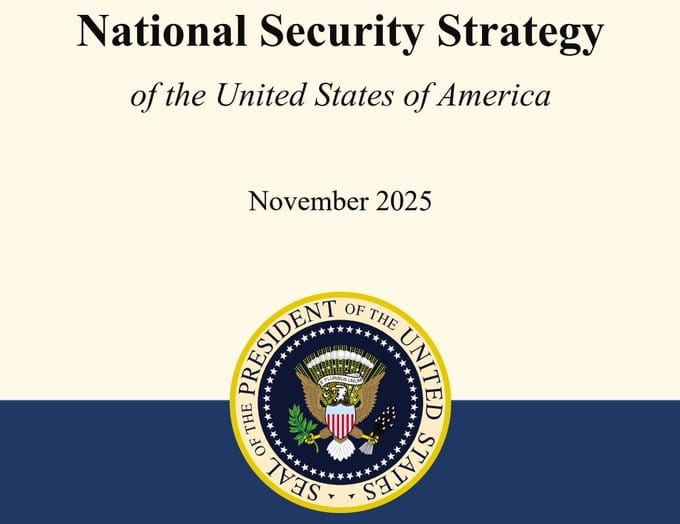
New National Security Strategy Just Dropped: What Does It Mean For Us?
The White House has released the 2025 National Security Strategy (NSS), and it marks one of the biggest strategic shifts in over a decade. If you’re a Guardsman, Reservist, or employer of part-time military talent, here’s what you need to know.
A More Focused, Home-First Strategy
Unlike previous strategies that cast the U.S. as a globally engaged problem-solver, the new NSS narrows national security priorities to what directly affects the United States. The focus is on protecting the homeland, securing borders, strengthening the economy and industrial base, and ensuring America’s technological edge.
The strategy also places new emphasis on the Western Hemisphere. Instead of deep involvement in far-away conflicts, the U.S. intends to prioritize stability and security closer to home.
Fewer Global Entanglements, More Regional Readiness
The NSS signals a shift away from extended overseas interventions or nation-building missions. Military power is still central, but used more selectively. This could mean fewer long, expeditionary deployments—and more emphasis on deterrence, readiness, and rapid response.
What This Means for Guard & Reserve Members
Because the strategy emphasizes homeland security, infrastructure protection, and border stability, the Guard and Reserve may play a larger role in domestic and regional missions. Skills tied to logistics, technology, energy, manufacturing, and critical infrastructure become even more important.
You may see:
More stateside activations supporting border security or counter-illicit activities
Greater demand for technical and dual-use civilian skills
Increased integration with industries tied to supply-chain resilience and national readiness
Fewer traditional overseas deployments, but more targeted, strategic missions
What It Means For Employers
Employers may feel these changes as well. Companies operating in logistics, tech, energy, and manufacturing may experience more competition for the same talent pool that the DoD values—creating both challenges and opportunities. Organizations that understand and support the military workforce will be better positioned under this strategy.
The 2025 NSS introduces a more focused, interest-driven approach to national security. For the part-time military force, it likely means less global policing—and a bigger role in protecting the nation closer to home.
We Got Your Unit Merch Needs Covered

some recent unit designs
If you want to make baller ass unit gear repping our logo suite, check out The Fratty Guard Unit Collab Store.
Or for the GOAT classics, check out The Fratty Guard Store.

PART⚡TIME News: What Happened Last week

Curated news for the P⚡T bois
After attack on two West Virginia Guard troops, their hometowns question deployments
US sets deadline for Europe to lead NATO by 2027, report says
Can Anduril’s EagleEye become the new face of warfare?
Appeals court pauses decision to end National Guard deployment in DC
Man charged in National Guard shooting pleads not guilty in court appearance from hospital bed
Army pilots face low morale and ‘survivor remorse’ amid massive cuts
Army activates Western Hemisphere Command
Support the Fight

If you support the work that Friendly Forces does, please consider making a tax-deductible donation to help keep the lights on. Every bit helps. Turns out stuff is expensive and we put countless man hours into the work.
That’s it for this week.
Absolutely massive things coming.